
Radical Resilience: 5 Epic Lessons on Reclaiming Your Life
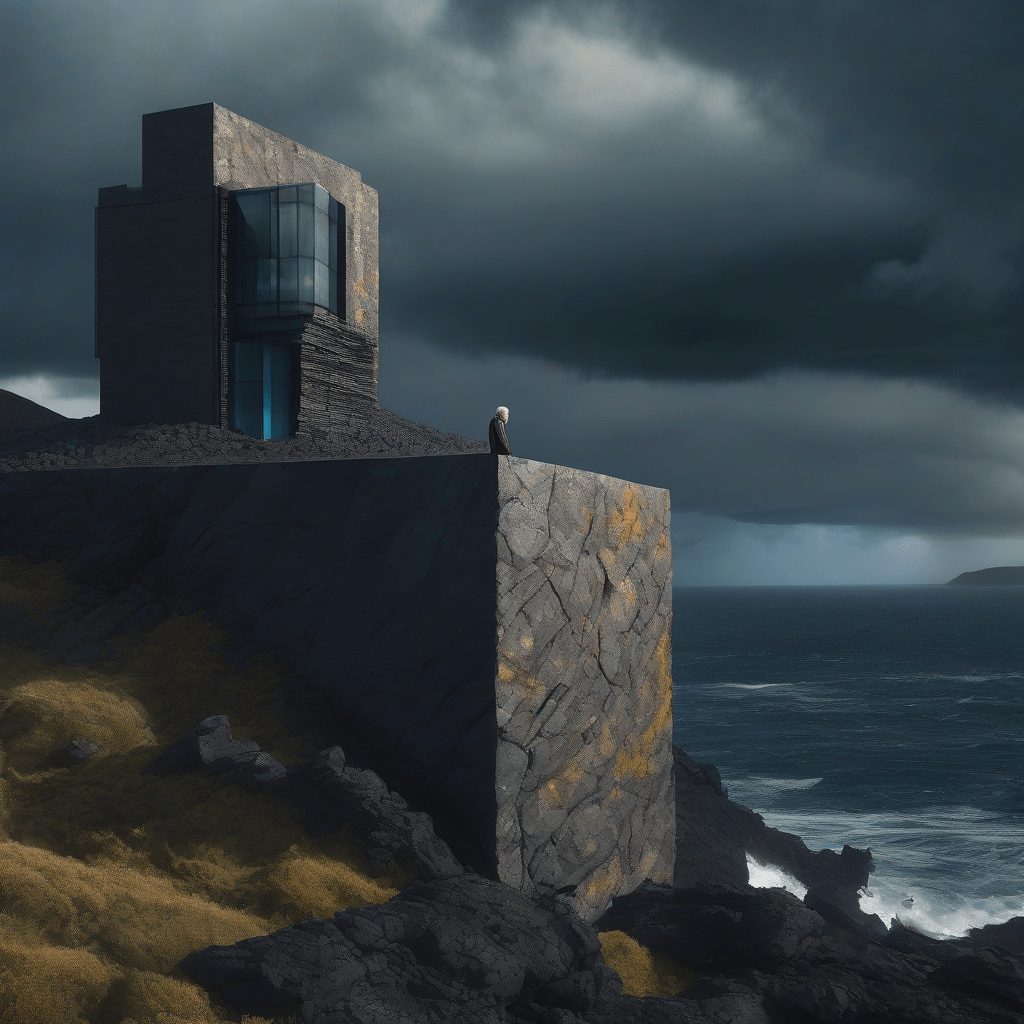
The wind on the cliffs of Aethelgard did not merely blow; it screamed. It was a visceral, haunting sound that seemed to echo the internal chaos of Malachi Stone as he stood on the precipice of his own undoing. For a man who had once designed the shimmering glass spires of the capital, the grey, oppressive fog of the coastline felt like a shroud. He had come here not for a vacation, but for an erasure. He needed to disappear because the world knew him only as the man whose pride had collapsed a bridge, taking with it his reputation and his spirit. In those early, frozen mornings, he realized that surviving was not enough; he needed Radical Resilience to truly rebuild the fragments of his shattered identity.
Radical Resilience: The Shattering of a Legacy
Five years ago, Malachi Stone was the golden boy of modern <a href=”https://en.wikipedia.org/wiki/Architecture“>Architecture. His designs were characterized by a daring defiance of gravity, using cantilevered slabs and transparent membranes that seemed to breathe with the city. He believed he had mastered the physics of the world, but he had forgotten the humility of the earth. The collapse of the Celestia Bridge was not a failure of mathematics, but a failure of oversight—a corner cut by a contractor that Malachi had blindly trusted in his arrogance. When the concrete groaned and the steel snapped, the world didn’t see the contractor; they saw the name etched into the cornerstone: Stone.
The aftermath was a blur of flashing cameras, shouting lawyers, and the deafening silence of former friends. He remember the way the courtroom smelled of old paper and indifference. As the judge read the verdict, Malachi felt a strange detachment, as if he were watching his own life collapse in slow motion. He didn’t fight the disgrace; he embraced it as a form of penance. He sold his estate, gave away his awards, and retreated to the only place he had left—a crumbling stone cottage in Aethelgard inherited from a grandfather he barely remembered. This was the nadir of his existence, a place where Radical Resilience felt like a cruel joke told by a distant god. He spent the first year in a state of catatonic grief, staring at the peeling wallpaper and the damp rot of the walls, wondering if a man could truly be erased.
Radical Resilience: The Exile to Aethelgard
Aethelgard was a land of jagged basalt and relentless rain. The village was a cluster of hovels clinging to the cliffside, inhabited by people who had been forgotten by the modern world. The locals viewed Malachi with a mixture of pity and suspicion. To them, he was the ‘City Man’ who had broken something big. He spent his days walking the shoreline, his boots sinking into the black volcanic sand, listening to the rhythmic thrum of the Atlantic crashing against the rocks. The sound was hypnotic, a constant reminder of the power of nature to erode everything man-made.
He struggled with the silence. In the city, noise had been a shield, a way to drown out the whispers of failure. Here, the silence was an amplifier. He could hear the frantic beating of his own heart and the crushing weight of his regrets. He would often wake up in the middle of the night, gasping for air, the phantom sound of twisting metal echoing in his ears. He realized that his mind was a ruin more extensive than any building. He began to study <a href=”https://en.wikipedia.org/wiki/Stoicism“>Stoicism, trying to find a way to detach his self-worth from his professional achievements. He learned that Radical Resilience is not about bouncing back to who you were, but about allowing the fire to burn away the ego so that something stronger can grow from the ash.
Radical Resilience: The First Stone
The turning point came on a Tuesday in November, during a storm that threatened to pull the very cliffs into the sea. A leak in the cottage ceiling had finally given way, dropping a torrent of freezing water onto his only remaining book. As Malachi looked up at the gaping hole in the roof, something inside him snapped. It wasn’t a break, but a release. He didn’t want to be a victim of the rain anymore. He didn’t want to be the man who let things fall apart.
He climbed into the attic with a rusted hammer and a handful of mismatched shingles. The work was grueling. His hands, once used to drafting pens and digital tablets, blistered and bled. The cold seeped into his marrow, and the wind threatened to throw him off the roof. But as he hammered the first nail, he felt a jolt of electricity. It was the simplest act of creation he had ever performed, and it was the most honest. There were no investors to impress, no awards to win—just a man and a leak. He spent the next three months obsessively repairing the cottage. He stripped the walls to the bone, replaced the rotted beams with salvaged oak, and scrubbed the floors until the wood glowed. This process was his first practical exercise in Radical Resilience. He discovered that the act of fixing a physical space could mirror the act of fixing a broken spirit. Each nail driven was a rejection of his previous defeat.
Radical Resilience: The Community of Outcasts
As the cottage transformed, Malachi began to notice the other ruins in Aethelgard. The village was falling apart. The communal pier was rotting, and the old lighthouse had been dark for a decade. He started spending his afternoons talking to the villagers, men and women whose faces were etched with the lines of a hard life. He met Elara, a former nurse who had lost her husband to the sea, and Silas, a fisherman whose hands were gnarled like driftwood. He discovered that every person in Aethelgard carried a hidden scar, a secret failure that they had learned to live with.
“We don’t talk about the past here,” Elara told him one evening over a pot of bitter tea. “We just make sure the walls hold until morning.” Malachi realized that these people possessed a natural, instinctive Radical Resilience. They didn’t have the luxury of a nervous breakdown; they had to survive. He began to offer his skills to the village for free. He fixed Elara’s leaking roof and reinforced Silas’s boat shed. He stopped seeing himself as a fallen architect and started seeing himself as a servant of the community. The shift in perspective was profound. By focusing on the needs of others, the suffocating grip of his own shame began to loosen. He was no longer the man who collapsed a bridge; he was the man who helped the village stand.
The Blueprint of the Impossible
Two years into his exile, a challenge presented itself. The village council wanted to build a new community center and library, but the only available land was a precarious ledge overlooking the ocean—a site that any traditional engineer would have deemed suicidal. The villagers had a small pot of savings, but no one would take the contract because the risk was too high. Malachi looked at the ledge and saw not a danger, but a mirror of his own life: a precarious position that demanded absolute precision and unwavering strength.
He spent six months designing the structure in secret. He didn’t use the flashy, avant-garde styles of his youth. Instead, he studied the way the basalt cliffs were layered and the way the wind curved around the headland. He designed a building that didn’t fight the elements but flowed with them. It was an organic structure, anchored deep into the bedrock with reinforced titanium pylons, its walls made of local stone and tempered glass. This was the ultimate test of Radical Resilience. He was risking his remaining sanity on a project that could either redeem him or destroy him completely. He worked by candlelight, his drawings becoming a manifesto of his rebirth. He integrated concepts of <a href=”https://en.wikipedia.org/wiki/Resilience_(Psychology)”>psychological Resilience into the very layout of the building, creating spaces of sanctuary and openness that would encourage the villagers to heal together.
The Storm of Reckoning
The construction took three years. Malachi led the effort, teaching the villagers how to mix high-strength concrete and how to set stone for eternity. The community center became more than a building; it became a collective act of hope. However, the true test arrived in the winter of the fourth year. A ‘Once-in-a-Century’ storm hit the coast, bringing winds that reached speeds of 120 miles per hour and waves that dwarfed the lighthouse. The village huddled in the newly completed center, the walls trembling under the assault of the gale.
Malachi stood in the center of the great hall, watching the rain lash against the glass. He could feel the building vibrating, a low hum that resonated in his chest. For a moment, the old fear returned—the image of the Celestia Bridge snapping. He closed his eyes and whispered to himself, “Hold. Just hold.” He had built this structure with the knowledge of his failures. He had accounted for every possible weakness because he had lived through the ultimate weakness. As the storm peaked, a massive piece of debris from the old pier slammed into the outer wall. The glass groaned, but it didn’t shatter. The pylons held. The building didn’t just survive; it thrived in the chaos. The villagers looked at Malachi, and for the first time in years, he didn’t look away. He realized that Radical Resilience was not the absence of fear, but the ability to build something that can withstand it.
The Ascent from the Ashes
When the storm cleared, the community center stood as the only intact structure on the cliffside. It became a beacon for the entire region, drawing architects and thinkers from across the globe who wanted to see the ‘Impossible Building.’ The media that had once crucified Malachi now sought to crown him as a genius of ‘Sustainable Survival.’ They offered him millions to return to the city and design the next generation of skyscrapers. They wanted the man who had conquered the storm.
But Malachi Stone was no longer that man. He looked at the offers and felt nothing but a distant, fading attraction. He realized that the prestige of the city was a hollow shell. True success was not found in the applause of strangers, but in the trust of a neighbor and the stability of a well-placed stone. He declined the offers and stayed in Aethelgard. He established a school of Architecture there, teaching students that the most important part of any structure is the foundation—and that the most important foundation for a human being is Radical Resilience. He spent the rest of his days walking the basalt cliffs, no longer seeking erasure, but celebrating the beautiful, jagged scars of a life lived, lost, and reclaimed.
Frequently Asked Questions about Radical Resilience
What exactly is Radical Resilience?
Radical Resilience is the process of not just recovering from a catastrophic failure, but using the debris of that failure to build a completely new and stronger version of oneself. Unlike standard Resilience, which focuses on returning to a previous state, radical Resilience acknowledges that the previous state was flawed and seeks a transformative evolution.
How can I apply these lessons to my own career failures?
The first step is to accept the failure completely without evasion. Like Malachi, you must move from the ‘shattering’ phase to the ‘repair’ phase. Start with small, tangible wins—fix a ‘leak’ in your life—and gradually expand your scope. Focus on serving others, as this shifts your identity from your failure to your contribution.
Is it possible to recover from a public disgrace?
Yes, but it requires a period of exile and introspection. Public disgrace often stems from a misalignment between ego and reality. By removing yourself from the environment that witnessed your fall, you can rebuild your character in private, ensuring that when you eventually return to the public eye, you are anchored by substance rather than image, embodying Radical Resilience.
What is the role of community in the healing process?
Community provides the necessary mirror to see ourselves outside of our mistakes. When we help others overcome their struggles, we realize that our pain is universal. This connection diminishes the isolation of failure and provides a supportive framework that makes the journey toward Radical Resilience sustainable.
Why is the ‘foundation’ metaphor important in Resilience?
In Architecture and life, a foundation is the unseen part that supports everything visible. A failure is often a sign that the foundation—be it pride, lack of ethics, or instability—was weak. Building a new foundation means developing core values, discipline, and humility that can support the weight of future successes without collapsing.
Conclusion: The Eternal Blueprint
The story of Malachi Stone serves as a timeless reminder that no fall is too deep to be climbed out of. His journey from the heights of arrogance to the depths of despair, and finally to the peak of genuine fulfillment, illustrates that the most beautiful structures are often those that have been reinforced after a collapse. We all face moments where our lives feel like ruins, where the world expects us to stay broken. However, it is in those moments of absolute stillness and devastation that we find the opportunity for Radical Resilience.
By embracing the struggle, serving our fellow humans, and building our lives with honesty and humility, we can transform our greatest mistakes into our greatest masterpieces. Remember that the storm does not come to destroy the building; it comes to test the strength of the anchor. When you apply Radical Resilience to your own life, you stop fearing the wind and start trusting the stone.