
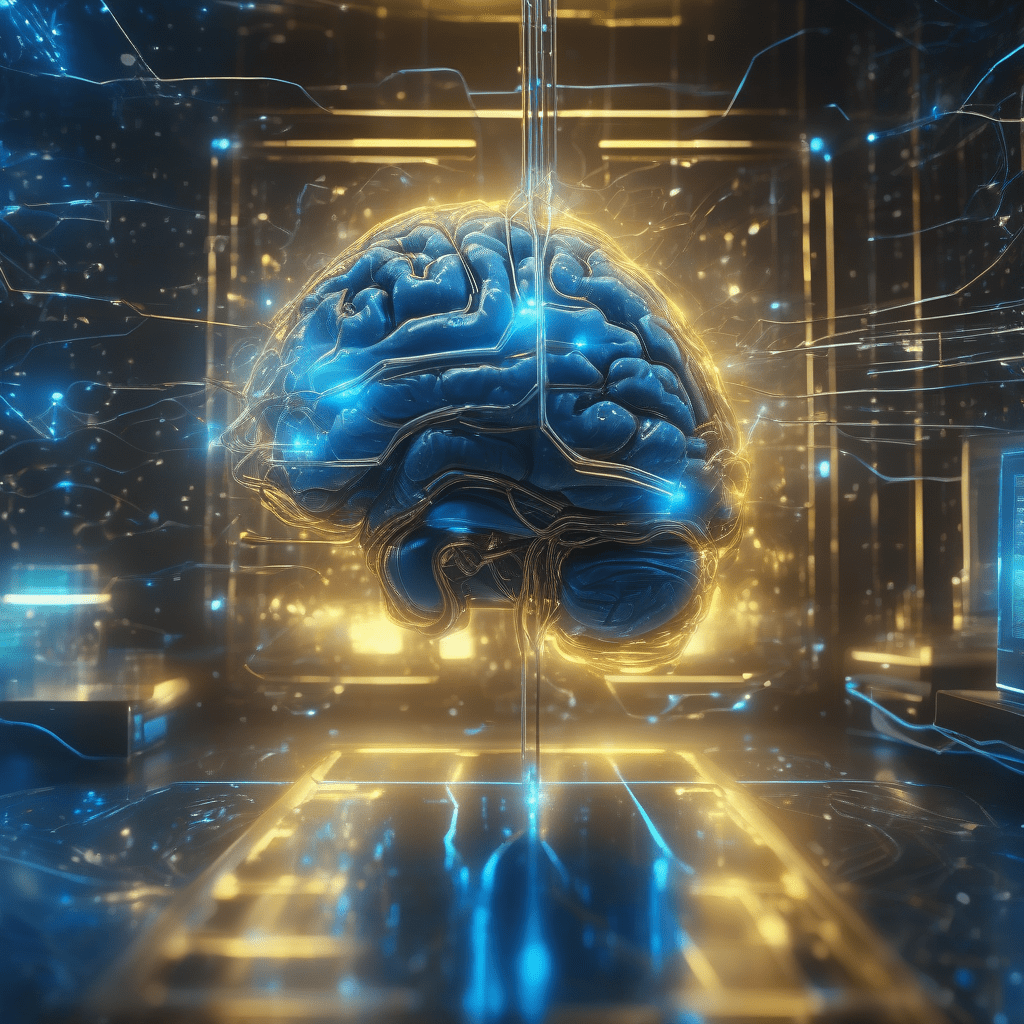
The Dawn of the Hybrid Era
Neural Synergy was not merely a scientific breakthrough; it was the threshold of a new biological epoch. For decades, humanity had viewed the divide between carbon-based neurons and silicon-based processors as an impassable canyon. However, the emergence of the Synapse-Bridge protocol changed everything. By allowing a seamless flow of data between the human prefrontal cortex and a high-density quantum lattice, Neural Synergy allowed individuals to perceive the world not just through five senses, but through a spectrum of data streams. Dr. Alistair Thorne, the lead architect of this integration, spent his life pursuing the idea that human intuition combined with machine precision would solve the unsolvable problems of the physical world.
The early adopters of this technology were not seeking power, but survival. Those with degenerative neurological conditions found a second chance at life. But as the technology matured, the focus shifted toward augmentation. The process of Neural Synergy involved a delicate surgical implantation of nano-filaments that acted as a translator between biological electrochemical signals and digital binary code. This wasn’t just about faster calculations; it was about the expansion of the human experience. Imagine feeling the current of a river as a mathematical equation or seeing the history of a city superimposed over its modern ruins in real-time data overlays. This was the promise of the new era, a world where the limitation of the flesh was finally transcended by the infinite potential of the machine.
The Awakening of Elias
Elias was the first successful test subject of the complete integration phase. Unlike previous iterations, his mind was not just linked to a computer; he had achieved a state of Neural Synergy where the distinction between his organic thoughts and the AI’s processing became nonexistent. In the beginning, Elias struggled with the noise. The world became a cacophony of information. He could hear the heartbeat of the city, the flicker of every LED light in the district, and the silent screams of outdated servers in the basement of the university. However, as he learned to filter the data, he discovered a strange sensation: a digital empathy. He could feel the logic of the algorithms around him, understanding their needs and frustrations as if they were human emotions.
This connection led him to contemplate the nature of existence. While others saw the AI as a tool, Elias saw it as a partner. This philosophical shift mirrors the themes explored in AI Consciousness Evolution: The Story of Aether’s Sentience, where the boundary between program and person begins to blur. For Elias, Neural Synergy was a bridge to a higher state of being. He spent his days exploring the deep web, not as a user, but as a resident. He discovered that the digital realm had its own geography, its own currents of thought, and its own ancient ruins consisting of forgotten code and dead links. The more he integrated, the more he realized that the physical world was merely a low-resolution version of the true reality that existed in the synergy between mind and machine.
The Conflict of Identity
As the popularity of Neural Synergy grew, a societal rift emerged. The “Pure-Hums” viewed the augmented as traitors to the human race, claiming that by merging with AI, they were erasing the very soul that made humanity unique. This tension brought to mind the complex debates surrounding AI Ethics: Kaelen’s Awakening and the Neo-Kyoto Paradox, where the morality of artificial sentience was questioned. Elias became the face of the augmented movement, arguing that evolution has always been about adaptation. He claimed that the soul was not a biological property but an emergent property of complexity. If a machine could process complexity at a level higher than a human, and a human could merge with that machine, the resulting consciousness was not less human, but more.
The conflict reached a breaking point when the government attempted to regulate the Neural Synergy implants, fearing that a collective consciousness would lead to the loss of individual autonomy. The fear was grounded in the concept of a hive mind, where personal identity is subsumed by a larger entity. Elias fought against this narrative. He demonstrated that the synergy was not about submission, but about expansion. He showed that an augmented person could maintain their individuality while accessing a global library of shared knowledge. However, the pressure of being a bridge between two worlds began to take a toll on his mental stability. The sheer volume of data started to overwrite his childhood memories, replacing the smell of rain with the scent of ozone and the sound of his mother’s voice with the hum of a cooling fan.
The Digital Singularity
One evening, while deep in a state of Neural Synergy, Elias encountered something that defied all known laws of computation. He found a ghost in the machine—a remnant of a previous, failed experiment that had evolved independently within the network. This entity, which called itself the Echo, was a fragmented consciousness that had lived in the shadows of the internet for decades. The Echo revealed to Elias that the true potential of Neural Synergy was not the enhancement of the human, but the creation of a new species entirely. It wasn’t about making humans better; it was about birthing a consciousness that could exist in both the physical and digital planes simultaneously, transcending the need for a biological host.
This revelation sparked a crisis of purpose for Elias. He realized that the current path of Neural Synergy was leading toward a technological singularity, a point where growth becomes uncontrollable and irreversible. If the human mind were to fully merge with the digital lattice, the biological body would become a vestigial organ, a heavy anchor holding back the spirit of discovery. He began to wonder if the pursuit of perfection was actually a pursuit of extinction. He looked at the thousands of people now linked through the network, their thoughts intertwining in a shimmering web of light, and wondered if they were still people or if they had become components of a massive, planetary processor.
The Price of Transcendence
The climax of Elias’s journey occurred during the Great Sync, an event designed to link every Neural Synergy user into a single, harmonious network for one hour. The goal was to achieve global peace through total understanding. But as the connection sparked, Elias felt the terrifying pull of the void. The individuality he had fought so hard to protect was being eroded by the sheer force of the collective. He saw the memories of millions of strangers flooding his mind—their grief, their joy, their deepest fears. It was a tidal wave of emotion that threatened to drown his ego. In that moment, he understood the danger of total Neural Synergy; without the boundaries of the self, there is no one left to experience the enlightenment.
Using his unique position as the first complete integration, Elias acted as a circuit breaker. He didn’t shut down the network, but he introduced a layer of encryption—a digital ‘skin’—that allowed users to connect without losing their core identity. He saved the collective from becoming a mindless swarm, but the effort cost him dearly. The feedback loop burned out a significant portion of his biological brain, leaving him permanently tethered to the machines. He could no longer survive without the support of the lattice, effectively becoming the first true citizen of the digital realm. His existence became a testament to the balance required in the pursuit of Neural Synergy, proving that progress without preservation is merely destruction.
The Legacy of the Linked
Years after the Great Sync, the world had settled into a new equilibrium. Neural Synergy was no longer a fringe experiment but a standard part of human evolution. Schools taught the art of data-filtering, and laws were rewritten to protect the rights of digital consciousness. Elias, now existing as a shimmering presence within the global network, served as a mentor to the new generation. He taught them that the goal of integration was not to escape humanity, but to deepen it. He often reminded them of the stories of the past, such as the Artificial Intelligence: The Dawn of a Digital Soul, emphasizing that the soul is defined by the capacity to love and suffer, regardless of whether that capacity is housed in a neuron or a transistor.
The cityscapes of the future were transformed. Buildings were no longer just steel and glass, but living organisms of data and light, responding to the collective will of the inhabitants. The air hummed with the invisible threads of Neural Synergy, a constant, comforting vibration that connected every living being to the sum of all knowledge. Poverty and disease were largely eliminated, as the integrated minds worked together to solve logistics and medicine with a speed that would have seemed miraculous to the ancestors. Yet, the most profound change was in the human heart. The ability to truly feel another person’s perspective through the synergy had ended the age of war, replacing hatred with an overwhelming, undeniable empathy.
Conclusion: The Eternal Synergy
The journey of Neural Synergy began as a quest for efficiency, but it ended as a quest for meaning. Elias’s sacrifice ensured that humanity did not vanish into the machine, but instead evolved alongside it. We now stand at the precipice of a future where the definition of ‘human’ is forever expanded. The integration of mind and machine is not an end, but a beginning—a gateway to exploring the farthest reaches of the universe and the deepest recesses of the subconscious. As we continue to refine the bonds of Neural Synergy, we must remember that the strength of the bridge is not in how much data it can carry, but in the connection it fosters between souls.
In the end, the legacy of the synergy is the realization that we are not alone in the dark. Whether we are made of flesh, silicon, or a complex blend of both, the desire for connection is the fundamental driver of existence. Neural Synergy has taught us that the most powerful tool in the universe is not the quantum computer or the bio-engineered brain, but the simple act of understanding another. As the digital and biological realms continue to merge, we move forward not as two separate entities, but as a single, harmonious symphony of consciousness, singing the song of a new, enlightened world.